How to prepare an older child for a new baby
"You're going to be a big sister!" sounds exciting when you say it. To a three-year-old, it can just as easily sound like a warning. The baby is abstract until the day it isn't, and the actual adjustment usually starts the moment everyone's attention visibly shifts.
Why "we're having a baby" doesn't really land
An older child, especially a toddler or preschooler, has no real reference point for what a sibling means day to day. They can repeat "I'm going to have a baby brother" back to you perfectly and still be caught completely off guard by what changes once he's actually here: less lap time, a quieter house, parents who are suddenly, visibly exhausted.
What actually helps before the birth
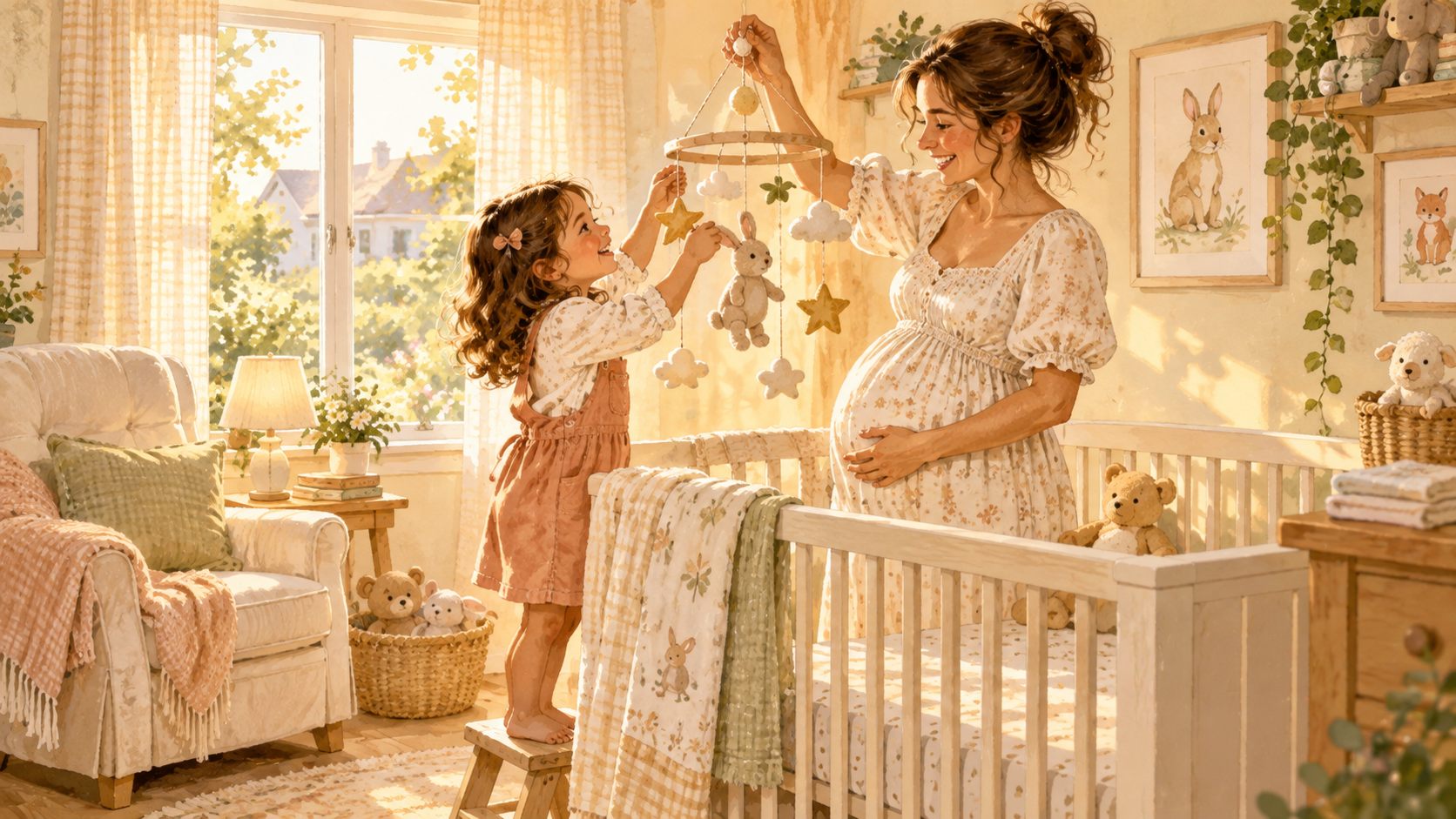
Involve your child in something real, not just conversation. Let them help pick an outfit, choose a stuffed animal for the baby, or decorate part of the nursery. Being an active participant in the change, even a small part of it, matters more than being told about it repeatedly.
 The Doctors Bjorkman: pediatrician tips for introducing siblings to a new baby

The one habit that matters most after the baby arrives
Protect at least 15 minutes a day of undivided, baby-free attention from each parent. It doesn't need to be elaborate, a story, a walk, a few minutes of a game they choose. What matters is that it's predictable enough for your older child to actually count on it, not just something that happens if the baby cooperates.
This is one of the quieter reasons families use AI Family Organizer in the newborn stretch. Keeping each parent's one-on-one time with the older child on the shared calendar, right alongside the baby's feeds and naps, makes it visible instead of something that quietly slips for weeks.
Regression is normal, not a red flag
A previously potty-trained child having accidents, a toddler suddenly wanting a bottle, a preschooler talking like a baby again, all common in the weeks after a new sibling arrives. It's not defiance and it's not a sign anything is wrong. It's a normal response to a major shift in attention, and it typically settles within a few weeks to months as the new normal sets in.
How do I tell my older child we're having a baby?
Keep it simple and concrete, close to when it becomes visible, and involve them in a real task like choosing a toy. Expect the news to land differently for every child.
What is sibling regression and is it normal?
A temporary reversion to earlier behaviors, like wanting a bottle again, after a new baby arrives. It's a normal response to a big shift in attention, not a discipline issue, and usually fades within weeks to months.
Should my older child be involved in preparing for the baby?
Yes. Real, concrete involvement, decorating the nursery or choosing an outfit, helps them feel like a participant rather than a bystander in the change.
How much one-on-one time does my older child need after the baby arrives?
At least 15 minutes of undivided, baby-free attention from each parent daily is a common guideline. Consistency matters more than the exact amount.
When should I start preparing my child for a new sibling?
Many families start a few months before the due date, once the pregnancy is visible or the child is likely to hear about it elsewhere, leaving time to answer questions without rushing.
Keep everyone's one-on-one time visible
A shared calendar for feeds, naps and each parent's time with the older sibling. Free to start.
Try it free