How to get your kids to listen without yelling

"I've told you three times already" is one of the most common frustrations in parenting, and it's rarely actually about a child not listening. It's usually about how the request was delivered the first two times, before the volume went up.
Why repeating the same request doesn't work
A request shouted from another room competes with whatever a child is already doing, a show, a toy, their own train of thought. Without eye contact or proximity, it's easy for it to genuinely not register as something that needs a response right now, which is different from deliberately ignoring it.
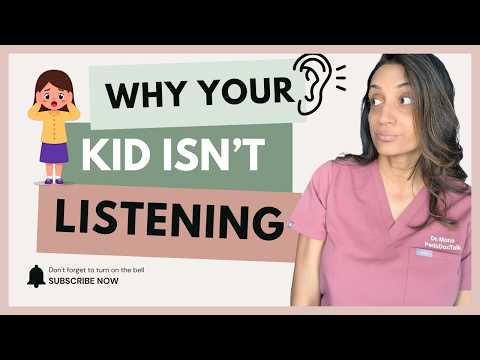 PedsDocTalk: how to get kids to listen without yelling or repeating
Get close before you ask
Walking over, getting to eye level, and making sure you have a child's attention before speaking dramatically cuts how often a request needs repeating. It takes a few more seconds than shouting from the kitchen, and it usually saves far more time than it costs by avoiding the repeat-and-escalate cycle entirely.

Give one instruction, not three
"Shoes on, then coat, then get in the car" is a lot for a young child to hold onto at once. One short, specific instruction at a time, "shoes on, please," said directly, tends to land better than a longer list delivered all at once, especially for toddlers and preschoolers still building that skill.
What to do when yelling has already become the habit
It's a pattern that can be changed, not a fixed trait. A brief pause before responding when frustration spikes, even a few slow breaths, gives the reactive urge somewhere to go before it turns into volume. Expect this to be a gradual shift with slip-ups along the way, not an overnight fix.
Keeping routines and expectations, like a morning or bedtime sequence, visible on a shared calendar in AI Family Organizer also reduces how often a request comes as a surprise in the first place, since the child can see what's coming next too, not just be told it in the moment.
Why do I have to repeat myself so many times before my kids listen?
Often because early requests were given from a distance without real attention. Getting close and making eye contact first usually cuts repetition a lot.
Does yelling actually work to get kids to listen?
It often produces quick compliance, but tends to teach a child to wait for the loud voice, meaning more yelling is needed over time, not less.
What should I say instead of yelling at my kids?
One short, specific instruction given at eye level, like "shoes on, please," works better than a long request shouted from a distance.
How do I stop yelling at my kids when I'm already frustrated?
A brief pause, even a few slow breaths, before responding helps. It's a skill built gradually with practice, not an overnight fix.
At what age do kids start actually understanding instructions?
Toddlers can follow simple, single-step instructions from around age 2, with multi-step instructions developing gradually through the preschool years.
Make the routine visible, not just spoken
A shared calendar so kids see what's coming, not just get told in the moment. Free to start.
Try it free